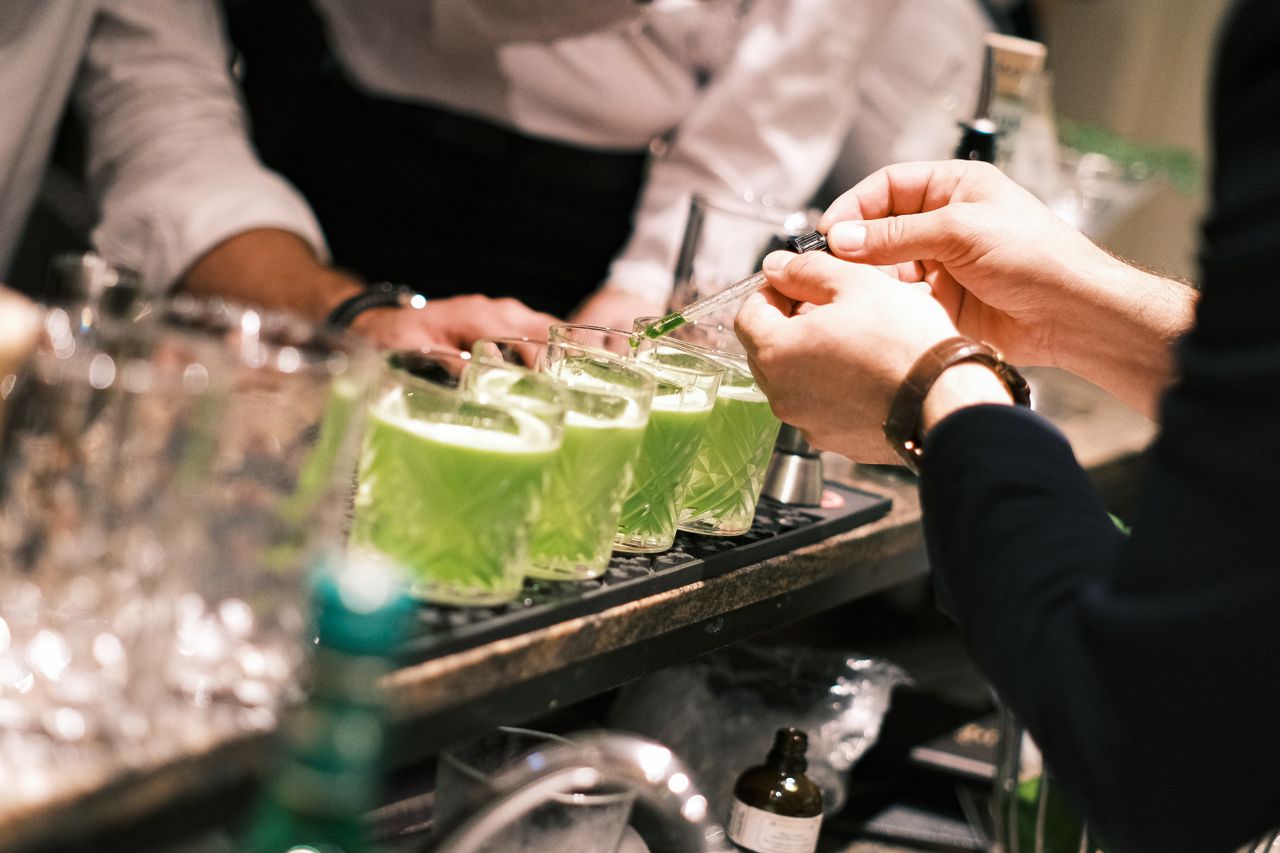
The science of the sip explores how chemical compounds, sensory perception and ingredient interactions determine the flavour of a cocktail.
In professional mixology, the relationship between acidity and sweetness is particularly important, as these two elements influence everything from the initial taste to the lingering finish.
Creating a well-balanced cocktail involves much more than combining premium spirits with fresh ingredients.
Understanding how sugars, organic acids, alcohol and temperature interact allows mixologists to develop sophisticated drinks with greater precision, consistency and flavour complexity.
The science of the sip and the chemistry of cocktail balance
Every cocktail generates a sensory experience involving taste, smell and mouthfeel. While the tongue detects five basic tastes (sweet, sour, bitter, salty and umami) the olfactory system contributes to the perception of more complex flavour profiles.
Acidity stimulates the perception of sourness, creating freshness and brightness. Sweetness, on the other hand, softens sharp flavours, moderates bitterness and can reduce the perceived harshness of alcohol.
Interestingly, these two taste sensations can partially suppress each other. Adding sugar to an acidic mixture reduces its perceived sourness without necessarily changing its pH. This interaction, known as taste mixture suppression, is one of the fundamental principles of cocktail formulation.
Understanding acidity in professional mixology
Acidity provides structure, freshness and definition to a drink. Without sufficient acidity, cocktails containing sweet ingredients can become heavy, flat or excessively sugary.
Although citrus fruits are traditionally associated with cocktail acidity, professional mixologists work with several organic acids, each offering distinctive sensory characteristics.
The different types of acids in cocktails
Among the most commonly used acids in contemporary mixology are:
- Citric acid, naturally present in lemons and limes, delivering bright and refreshing citrus notes.
- Malic acid, found in apples and pears, producing a crisp and persistent sourness.
- Tartaric acid, naturally occurring in grapes, contributing a distinctive sharpness.
- Lactic acid, associated with fermentation, providing a softer and more rounded acidity.
- Acetic acid, found in vinegar and cocktail shrubs, introducing tangy and complex flavour characteristics.
Combining different acids makes it possible to develop more layered flavour profiles and recreate the sensory characteristics of specific fruits.
The relationship between pH and perceived sourness
Although pH measures acidity in terms of hydrogen ion activity, it does not provide a complete picture of how sour a cocktail will taste.
Titratable acidity, which measures the amount of base required to neutralise acids to a defined endpoint, offers additional information. Consequently, two ingredients with similar pH values may produce noticeably different sensations on the palate.
Understanding this distinction helps explain why replacing lemon juice with another acidic ingredient does not always produce equivalent results.
The role of sweetness in cocktail flavour profiles
Sweetness contributes to flavour harmony while influencing texture, body and mouthfeel. Beyond simply making a drink sweeter, sugar can soften alcoholic intensity and connect otherwise contrasting ingredients.
Different sweeteners also introduce their own aromatic and sensory characteristics. Simple syrup offers relatively neutral sweetness, whereas honey introduces floral notes, agave nectar contributes vegetal nuances and maple syrup adds caramel-like complexity.
Measuring sugar concentration with the Brix scale
Professional mixologists can use a refractometer to measure the approximate sugar concentration of syrups and fruit juices through the Brix scale.
In a pure sucrose solution, one degree Brix corresponds to one gram of sucrose per 100 grams of solution. In more complex liquids, other dissolved substances can influence the reading, making direct measurements of alcoholic cocktails less reliable.
Standardising syrup concentrations nevertheless helps maintain consistency across recipes, particularly when preparing cocktails in large batches.
Cocktail ratios and the principles of flavour harmony
The classic sour cocktail formula provides a useful starting point for understanding the balance between sweetness, acidity and alcoholic strength. A commonly used ratio consists of two parts spirit, one part sour ingredient and one part sweet ingredient.
For example, a cocktail might combine 50 ml of base spirit, 25 ml of fresh lemon juice and 25 ml of simple syrup.
This formula should be treated as a flexible framework rather than a universal rule. Fruit ripeness, syrup concentration, alcohol content and ingredient characteristics can all influence the final result.
Professional bartending academies explore these variables through practical exercises and sensory evaluation. London-based mixology experts offering worldwide mixology training provide aspiring bartenders with opportunities to develop these technical skills alongside a deeper understanding of ingredient interactions.
How temperature and dilution influence taste perception
The science behind a balanced cocktail also involves physical factors. Temperature affects the release of volatile aromatic compounds and can alter sensitivity to sweetness, bitterness and other taste sensations.
A thoroughly chilled cocktail may therefore deliver a different flavour experience from the same recipe served at room temperature.
Similarly, dilution introduces water into the mixture, reducing alcohol concentration and modifying flavour intensity. Controlled shaking and stirring help establish an appropriate relationship between temperature, dilution and mouthfeel.
As ice continues to melt, the sensory profile gradually evolves, making the choice of ice and glassware an important consideration in cocktail preparation.
Applying sensory science to cocktail development
Developing a balanced cocktail requires systematic experimentation. Preparing small variations of the same recipe while adjusting one ingredient at a time makes it easier to identify how individual components affect the overall flavour profile.
For instance, increasing acidity in small increments can reveal the point at which freshness becomes excessive sourness. Likewise, gradually adjusting sugar concentration helps identify when a rounded mouthfeel becomes unpleasantly syrupy.
Ultimately, mastering the science of the sip means understanding why ingredients work together rather than simply memorising cocktail recipes. By combining flavour chemistry, precise measurements and sensory evaluation, aspiring mixologists can create distinctive, consistently balanced drinks while developing their own professional approach to cocktail design.

